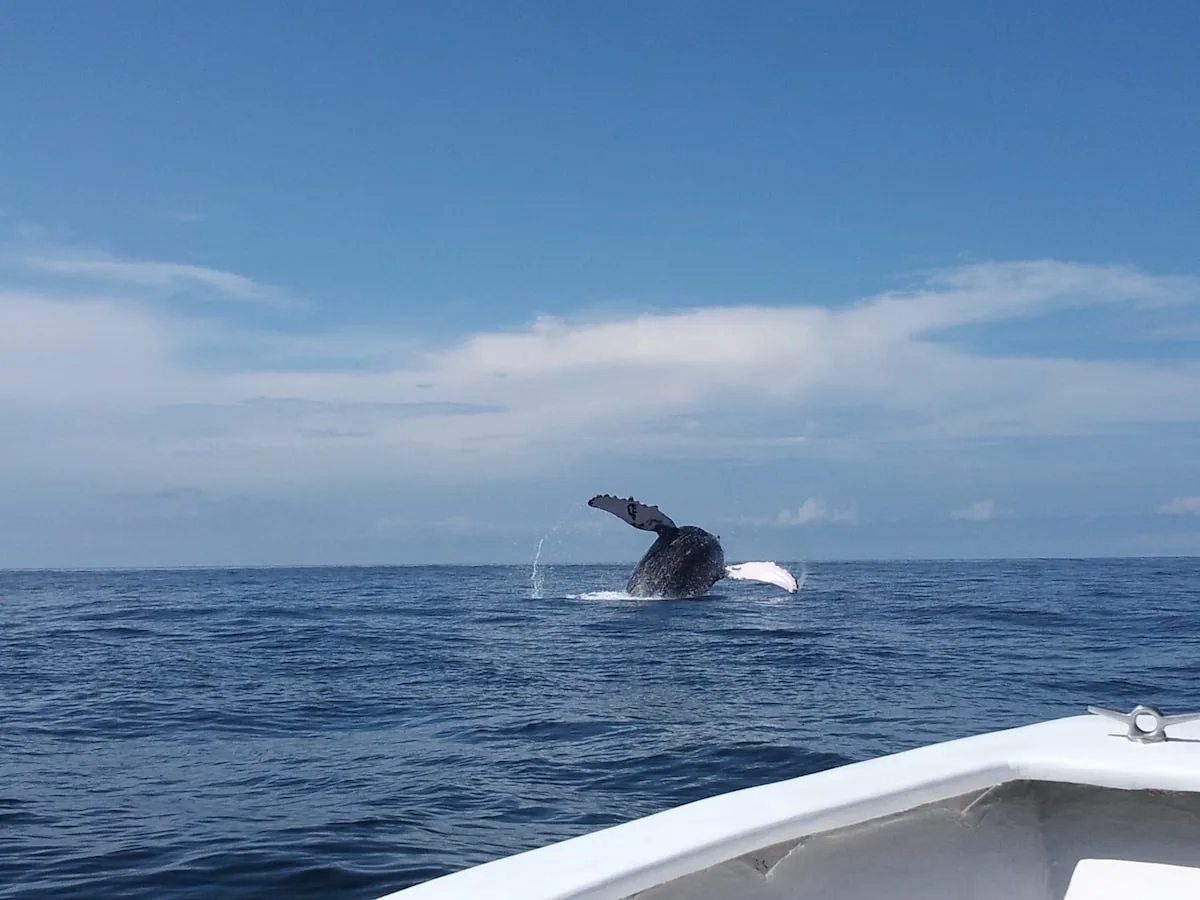
Humpback whales reach Marino Ballena National Park on Costa Rica’s Central Pacific coast from roughly mid-July to mid-October. The park sits near Uvita, about an hour south of Manuel Antonio, and it is one of the most dependable places in the Americas to see them. Tucanes runs a full-day trip from Manuel Antonio during the season: about three hours on the water, a bilingual naturalist guide, and the Whale’s Tail sandbar that gives the park its name.
When whale season actually runs
Costa Rica gets humpbacks twice a year, which is unusual and is the reason the season here stretches so long. Whales from the southern hemisphere arrive around the middle of the year, and a separate northern population passes through in the Costa Rican dry season. The southern run is the bigger event on this coast.
For Marino Ballena, the practical window is roughly mid-July to mid-October. That is when Tucanes runs the tour, and it is when the whales are actually in the bay rather than somewhere off the continental shelf. Early in the window you tend to see adults; later on you start seeing mothers with calves, which is the better show if you can time it.
Whales do not read calendars, so treat those dates as the shoulder of a curve rather than a switch. If you are building a trip around this, the middle of the season is the safer bet.
Why Marino Ballena, and not somewhere closer
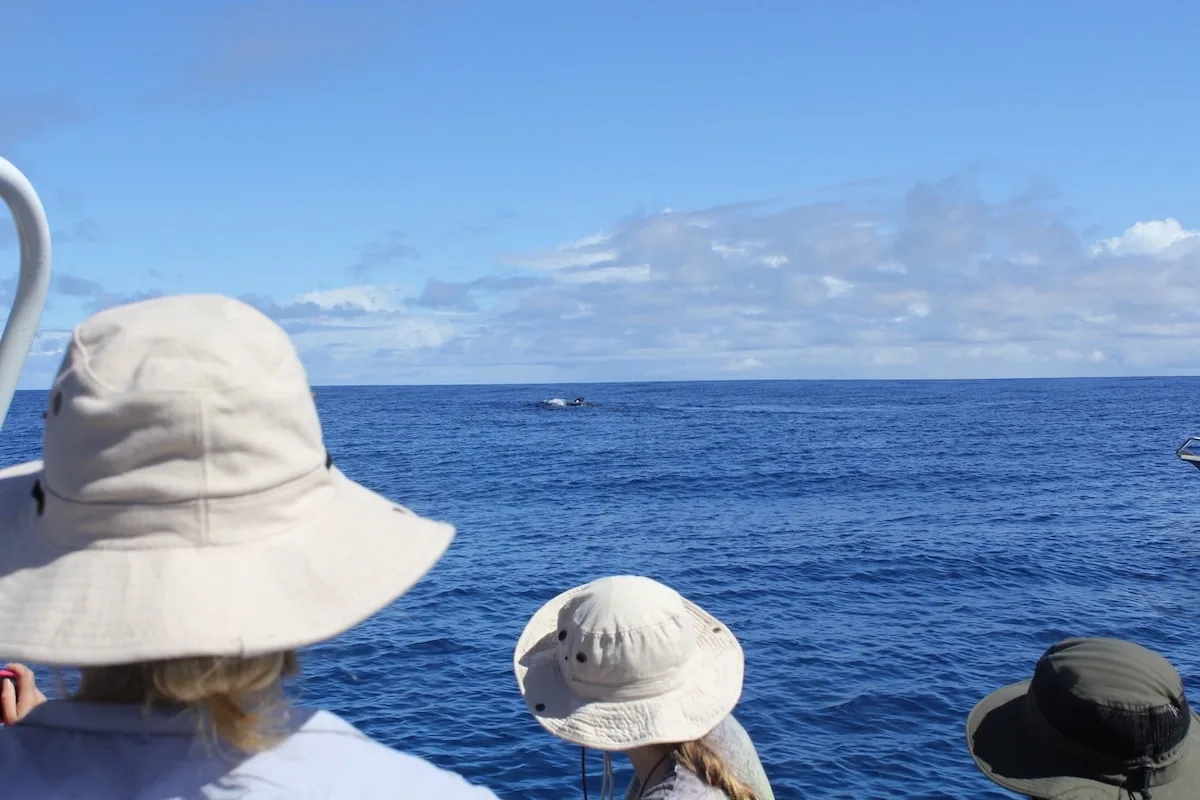
You can occasionally spot a whale from a boat off Manuel Antonio. You will see far more at Marino Ballena National Park, and the reason is geography. The bay there is shallow, warm and protected, which is what humpbacks want when they arrive to calve and nurse. They stay for weeks rather than passing through.
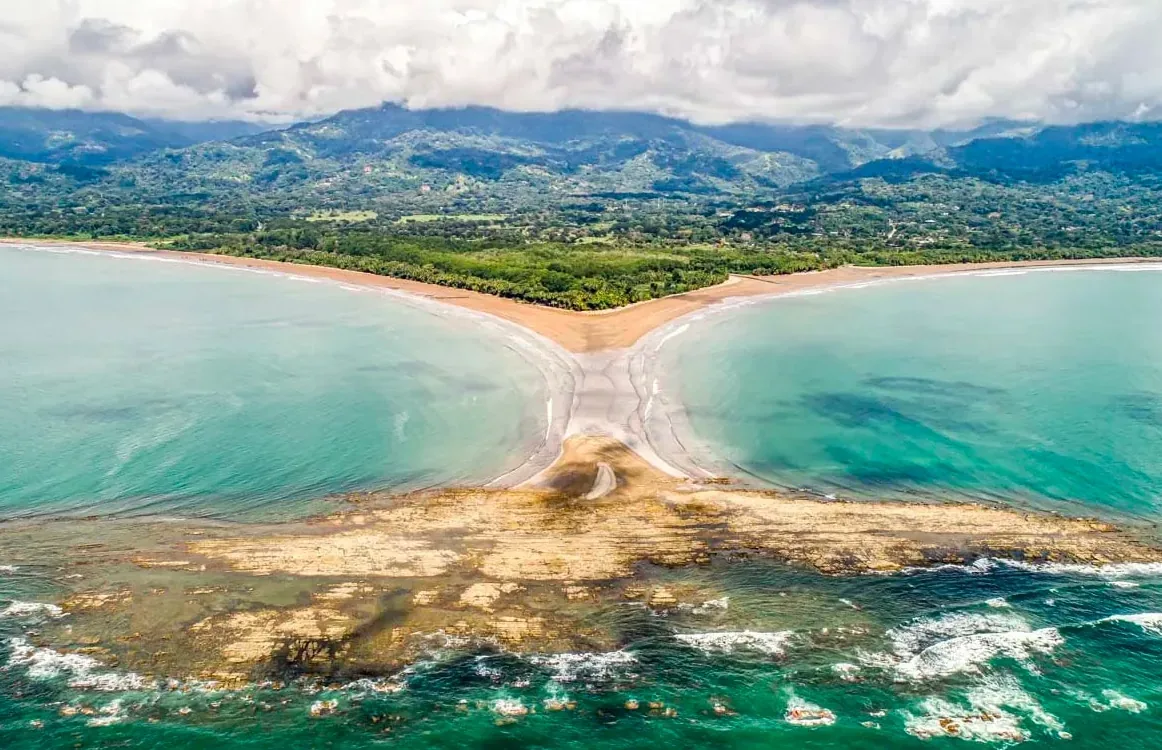
The park is also named for the thing you will photograph most: the Whale’s Tail, a sandbar at Punta Uvita shaped almost exactly like a fluke, with a rock reef trailing off the end of it. At low tide you can walk out onto it. From the boat, and especially from the air, the resemblance is uncanny.
If Uvita is where you are staying rather than a day trip, our tours departing from Uvita start closer to the water. Most guests join this one from Manuel Antonio, which is what the timings below assume.
What the day actually looks like
Pickup is at 7:00 AM from your hotel in the Manuel Antonio or Quepos area. The drive south takes about an hour and is genuinely scenic rather than something to endure: the road runs along the coast through Dominical and Playa Matapalo before dropping into Uvita, and your guide points out what you are passing.
At the park you board the boat and spend roughly three hours on the water. The boat works the coastline and the rock formations offshore, which have names worth knowing when the guide starts using them: Roca Ballena, Las Cavernas, Roca Viuda and Tres Hermanas. Whales are the headline, but the rocks and the birdlife are a real part of the trip.
You are back in Manuel Antonio in the afternoon. Total time is about six hours door to door.
A word on honesty, because it matters more than a sales line: sightings are not guaranteed anywhere on earth. These are wild animals in open ocean. During the season the odds at Marino Ballena are very good and the captains talk to each other about where the whales have been that week, but anyone selling you a guarantee is selling you something else.
What else you will see out there
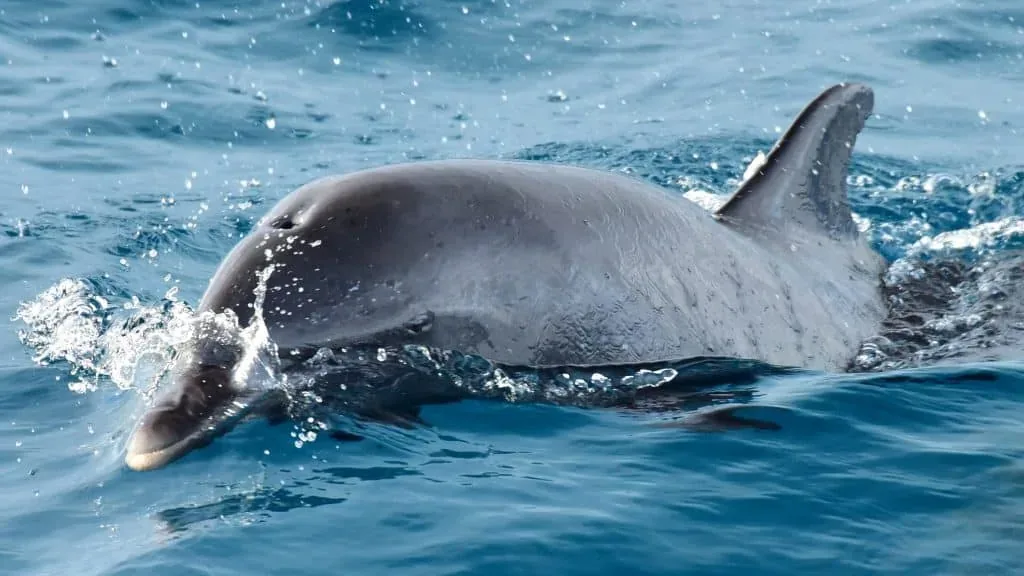
Most trips turn up more than whales. Bottlenose and spotted dolphins are common and often ride the bow, which for a lot of guests ends up being the moment they remember. Sea turtles surface regularly. Pelicans, frigatebirds and boobies work the same water the whales do, for the same reason.
If it is marine wildlife generally that you are after rather than whales specifically, the catamaran tour from Manuel Antonio runs year round and gets you snorkeling, and the Isla Damas mangrove boat tour is the better choice for birds and estuary wildlife.
What to bring
- Motion sickness tablets if you are at all prone. Take them before you board, not once you feel it.
- Reef-safe sunscreen and a hat. There is shade on the boat but you will be out in it for three hours.
- A light rain layer. This is green season on the Pacific coast. Mornings are usually clear and rain, when it comes, tends to come later.
- A camera with some zoom if you own one. Phones struggle with a whale a hundred metres out.
- Water and a snack beyond what is provided, if you eat often. Snacks are included, lunch is not.
Booking, price and pickup
The trip runs $165 per person from Manuel Antonio. That covers round-trip hotel transportation, the boat, the bilingual naturalist guide, the park entrance and snacks. Pickup is 7:00 AM and you are back mid-afternoon.
Transportation from the Manuel Antonio and Quepos area is included in that price, so there is nothing separate to arrange. If you are coming from further out and need a shuttle first, our private shuttles and transfers can get you into the area the day before.
Book ahead during the season. The boats are small, the tour does not run every day, and the good dates go first.
See full details and current availability for the Marino Ballena whale watching tour, or message us and we will tell you honestly how the sightings have been that week.
Frequently asked questions
When is whale watching season in Costa Rica?
At Marino Ballena the humpback season runs roughly mid-July to mid-October, when whales migrating from the southern hemisphere reach the warm Central Pacific water. Tucanes runs the tour seasonally during that window.
Where is the best place to see humpback whales in Costa Rica?
Marino Ballena National Park near Uvita is one of the most reliable places in the Americas. The bay is shallow, protected and warm, which is exactly what humpbacks look for when they arrive with their young.
Are whale sightings guaranteed?
No, and anyone promising otherwise is not being straight with you. These are wild animals in open water. What we can say is that during the season the odds at Marino Ballena are very good, and the guides know where the whales have been working that week.
How long is the whale watching tour?
About 6 hours door to door from Manuel Antonio. That is roughly an hour of scenic coastal drive each way and about three hours on the water.
What does the whale watching tour cost?
$165 per person from Manuel Antonio, including round-trip transportation, the boat, a bilingual naturalist guide, the park entrance and snacks.
Is the tour good for kids?
Yes, families do this trip regularly. It is an early start and a full day on a boat, so it suits children who travel well. If anyone in your group is prone to seasickness, take something before you board rather than after.
What else will we see besides whales?
Bottlenose and spotted dolphins are common, and so are pelicans, frigatebirds and sea turtles. The boat also passes the Whale’s Tail sandbar and rock formations like Roca Ballena, Las Cavernas and Tres Hermanas.
Do we need to book ahead?
During the season, yes. The boats are small and the tour only runs on certain days, so weekends and holiday weeks fill first. Booking a few days out is usually enough.
Keep planning
If whales are the anchor of your trip, the rest of the week is worth planning around them. Our guide to getting to Quepos and Manuel Antonio from San José covers the drive and the shuttle options, and the best spots to see sloths in Manuel Antonio is the natural pairing for a wildlife-led trip. For everything running while you are here, browse all Tucanes tours.